
High-rise Core
42-story mixed-use · 68 m freestanding · tip load held through monsoon gust windows with ISO 4301 hoist classification logged each jump.

From urban restricted slews to residential self-erect pads — Potain fleets show up where tip-load discipline and wind limits cannot slip.
Each card below cites freestanding height, tip-load discipline or slew constraints drawn from Potain commissioning dossiers filed between 2019 and 2025 — not marketing placeholders.
42-story mixed-use · 68 m freestanding · tip load held through monsoon gust windows with ISO 4301 hoist classification logged each jump.

Three overlapping jibs · anti-collision zones · slewing speed capped under 0.7 rpm inside neighbor swing arcs with zero recorded incidents.

Self-erect pad · 18-month housing program · same-day fold for street reopen without a separate assist crane.

Approach pier lifts · precast staging · tip-load charts sized for edge pours where boom length exceeds 55 m radius.
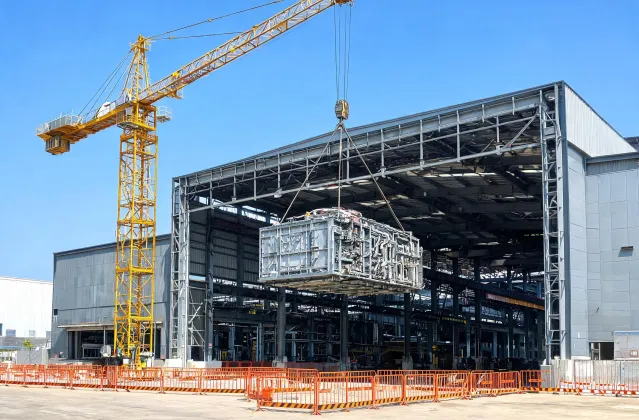
Process module set · indoor-outdoor interface · AS 2550 witness points with lifting capacity verified at the stated radius.
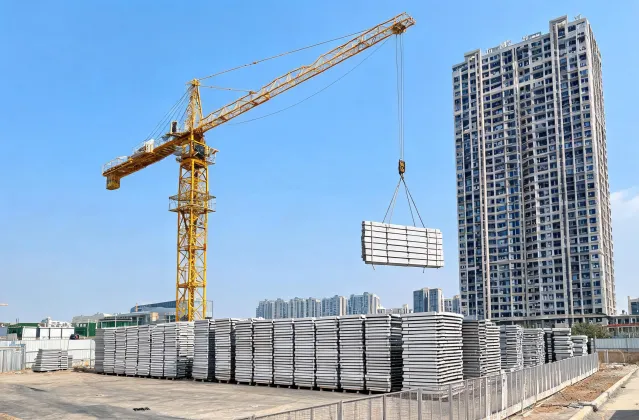
Facade panel cycles · trolley travel optimization · wire-rope discard logs tied to hoist speed (m/min) duty hours.
Tower crane buyers often debate flat-top productivity against luffing clearance. Potain publishes both sides so EPC planners can score the plot before a purchase order — not after an early neighbor complaint.
| Decision factor | Flat-top tower crane | Luffing jib tower crane |
|---|---|---|
| Clearance over neighbors | Jib stays horizontal; needs wider air rights and anti-collision zoning | Jib raises to clear adjacent towers; preferred on restricted-slew city blocks |
| Tip load at long radius | Stronger tip-load charts on open high-rise pads when boom length is unconstrained | Tip load drops faster as the jib luffs; size lifting capacity at the working radius, not brochure max |
| Hoist & slew duty | Higher trolley productivity; hoist speed (m/min) favors repetitive panel cycles | More winch cycles; slewing speed (rpm) often limited inside overlap envelopes |
| Operating weight & foundation | Typically lower operating weight for the same freestanding height class | Heavier counter-jib packages; confirm ground pressure (kPa) on soft urban fills |
Adapted from the wider industry debate on electric overhead vs diesel mobile cranes — tower crane sites face the same total-cost question when grid feed is unreliable.
Lower long-run energy cost, quieter night pours, and cleaner indoor-adjacent yards. Requires stable transformer capacity sized to peak hoist inrush and hydraulic system pressure demand during simultaneous trolley and slew moves.
Faster mobilization on greenfield pads without utility tickets. Fuel cost, emissions permits and generator duty hours become part of the lift plan — especially when annual hoist hours exceed 2,000 on remote infrastructure corridors.
| Spec | Unit | Why it matters on site |
|---|---|---|
| Lifting capacity | ton (t) at radius | Must match tip-load chart at working radius, not max catalog tonnage |
| Boom / jib length | m | Sets clearance, tip load and anti-collision zoning needs |
| Hoist speed | m/min | Drives pour-cycle time and wire-rope duty hours |
| Slewing speed | rpm | Limited inside urban overlap envelopes for neighbor safety |
| Operating weight | kg / ton | Feeds foundation design and temporary works calculations |
| Ground pressure | kPa | Critical on soft fills, basement digs and incomplete mats |
Share plot constraints, freestanding height and tip-load targets. We cite the closest Potain reference jobsite with comparable wind and overlap conditions.
Cite the closest reference jobsite